
Choosing the Right Puzzle Book for Aging Parents: A Thoughtful Guide
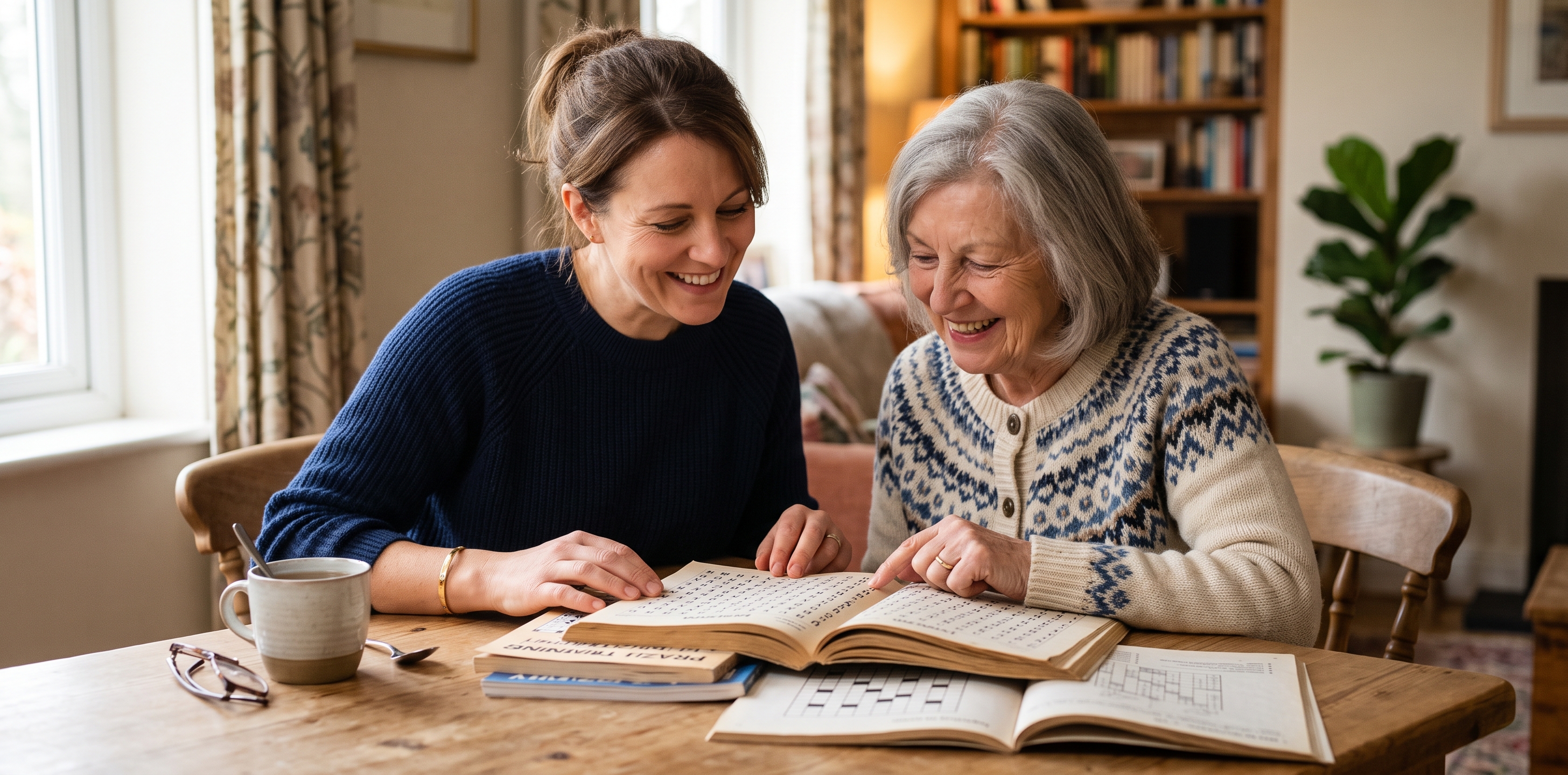
Picking a puzzle book for an aging parent is trickier than it looks. Too easy, and it reads as condescending — a “kids’ workbook for old people.” Too hard, and a gift meant to be enjoyable becomes one more frustration. The right choice usually comes down to two questions that have nothing to do with age: what kind of activity does this person actually enjoy, and can they read the page comfortably without a magnifying glass?
This guide walks through both, using the two puzzle and brain-training series in this catalog as concrete examples of how the same idea — engaging, recreational mental activity for older adults — can look completely different depending on what someone likes to do with their hands and their attention.
Start with what they already enjoy, not what seems “good for them”
Before anything else, figure out which of these two categories fits the person you’re shopping for:
- They like drawing, tracing, or working with their hands. A structured drawing-based series will feel more natural than word puzzles.
- They like word searches, trivia, logic puzzles, or crosswords. A puzzle-and-memory book will hold their attention far better than anything drawing-based.
Buying against this — a puzzle book for someone who’s never liked crosswords, or a drawing book for someone who wants nothing to do with art — is the single most common reason a gift like this ends up in a drawer.
Left Hand Brain Training vs. Sharp Mind, side by side
| Left Hand Brain Training for Seniors | Sharp Mind | |
|---|---|---|
| Best for | Someone who enjoys drawing, tracing, or hands-on activities | Someone who enjoys word puzzles, trivia, or logic games |
| Format | 5-book progressive series — start at Book 1 regardless of general dexterity | 3 standalone themed volumes — pick by topic, not by difficulty |
| What’s inside | Straight lines, curves, shapes, mazes, dot-to-dot, and pattern tracing, done with the non-dominant hand | Word searches, true-or-false, proverbs, and memory pages, mixed within each book |
| Where to start | Always Book 1 — First Strokes, even for someone with steady hands — the series is designed to build up gradually | Pick the theme that fits their interests: nostalgia-focused, general “brain gym,” or straightforward memory and focus drills |
| Large print & accessibility | Thick guide lines, single-sided pages, 8.5 x 11 in format | Large, easy-to-read type, solutions printed at the back of every book |
Both series share the same design principles: large print, generous single-sided pages, and solutions included so nobody has to guess whether they got it right. Neither is a medical or therapeutic product — they’re recreational activities, not treatments, and neither one diagnoses, prevents, or manages any condition.
Why format matters more than difficulty
It’s tempting to shop by “how hard is this,” but for most older adults, the format decides whether a book gets used at all, long before difficulty does. A puzzle they’d otherwise enjoy becomes unusable if the print is small or the page is cluttered. Before difficulty, check for:
- Genuinely large, high-contrast print — not just “larger than average,” but comfortable to read without straining.
- Single-sided pages, so there’s no ink bleed-through and no fighting a spiral binding to keep a page flat.
- Answers included, so a tricky puzzle doesn’t turn into a stalled, frustrating afternoon.
A book that nails the format but starts a notch too easy is far more likely to get used — and enjoyed — than one that’s perfectly pitched on difficulty but strains the eyes on page one.
Avoiding the “kids’ workbook” feeling
The fastest way for a gift like this to feel patronizing is presentation: cartoonish graphics, a childish tone, or puzzles that feel like they were built for a classroom. Look for books that treat the reader as a capable adult — themed around nostalgia, real-world trivia, or genuinely engaging pattern work, not simplified for its own sake. Sharp Mind’s “With a Touch of Nostalgia” volume, for example, works specifically because it leans into shared cultural memory rather than talking down to the reader.
If this is their very first puzzle or activity book
Start smaller than feels necessary. For a drawing-based gift, that means Left Hand Brain Training, Book 1 — First Strokes — not a later volume, even for someone who seems naturally dexterous, since the whole point is using the non-dominant hand, which is unfamiliar territory for everyone at first. For word and logic puzzles, pick a Sharp Mind volume themed around something the person is already interested in, rather than the “hardest” or most comprehensive option. A book that gets finished and enjoyed beats a book that gets abandoned on page three.
Frequently asked questions
What’s the actual difference between the two series? Left Hand Brain Training is a drawing-based series that uses the non-dominant hand — tracing, mazes, shapes, and patterns. Sharp Mind is a puzzle-and-memory book series — word searches, trivia, proverbs, and memory pages. They suit different kinds of people rather than different skill levels.
Should I start with an easier volume if my parent seems sharp? For Left Hand Brain Training, yes — always start at Book 1, since the series builds non-dominant-hand coordination gradually regardless of general sharpness. For Sharp Mind, the three volumes are standalone rather than sequential, so choose by theme and interest instead.
Are these books medical or therapeutic products? No. Both series are recreational, brain-fitness-inspired activities intended for enjoyment and engagement. Neither diagnoses, treats, or prevents any medical condition, including memory-related conditions — anyone with a specific health concern should talk to a healthcare provider.
What if I don’t know which type my parent would prefer? Ask what they already spend downtime doing. Someone who doodles, colors, or does needlework will likely take to Left Hand Brain Training. Someone who does the newspaper crossword or word search page will likely prefer Sharp Mind.
Is large print really necessary, or is that just marketing? It matters more than most other factors. A puzzle book that’s genuinely difficult to read gets set aside regardless of how well-matched the content is — checking print size and contrast before difficulty prevents that outcome.
Haven't tried the series yet?
Grab a free sample from Left Hand Brain Training for Seniors.