
How to Explain Día de los Muertos to Kids (Gently and Respectfully)
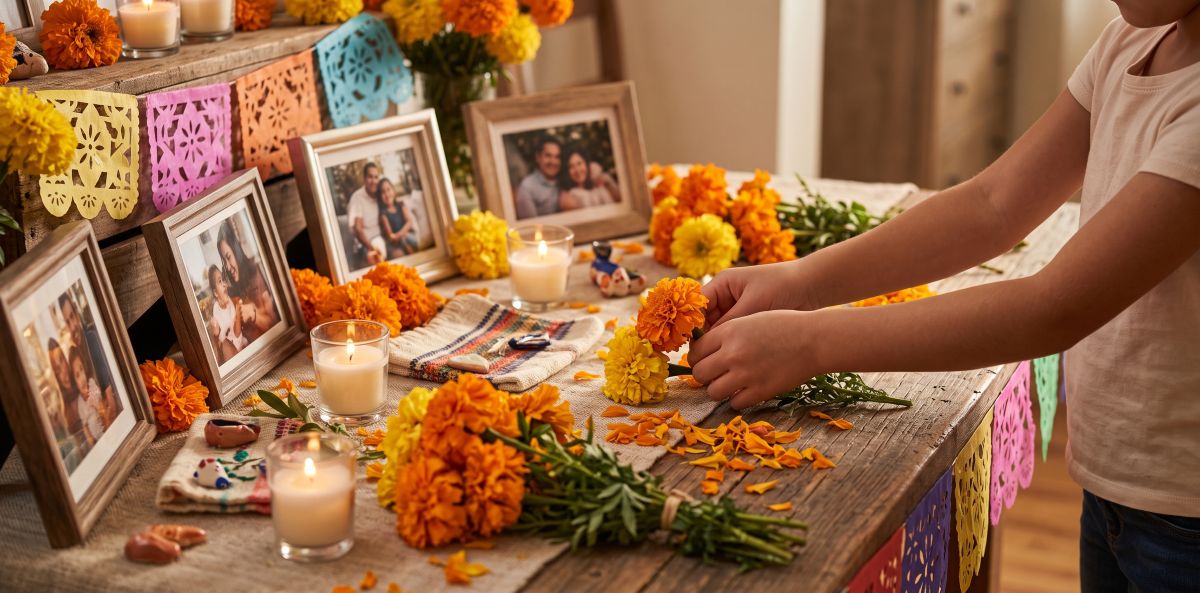
Quick answer: Día de los Muertos (Day of the Dead) is a Mexican tradition, usually observed on November 1 and 2, in which families remember loved ones who have died. It is not a scary holiday and it is not “Mexican Halloween”. Families build an ofrenda, a home altar with photos, candles, flowers and favorite foods, and they tell happy stories. To explain it to a child, focus on three ideas: remembering, love and family. UNESCO inscribed this Indigenous festivity of Mexico on its Representative List of the Intangible Cultural Heritage of Humanity in 2008.
Many children first meet Día de los Muertos through skulls, bright colors or a film, and they may ask, “Is it scary?” or “Is it like Halloween?” This guide gives you simple words to answer, by age, and ideas for joining in respectfully. Traditions vary by region and by family, so treat it as a starting point for a conversation.
What is Día de los Muertos?
Britannica describes Día de los Muertos as a holiday rooted in Indigenous cultures that treats death familiarly rather than with fear, and it notes that it is distinct from Halloween even though the dates are close. UNESCO explains that the festivity takes place from late October to early November, at the end of the annual maize cultivation cycle. Families welcome the souls of loved ones back with flower petals, candles and offerings, and they prepare the favorite dishes of the person they are remembering.
In other words, it is a reunion of memory: a time to say a name aloud, share a story and put out something the person loved.
What do the symbols mean?
| Symbol | What it is | What it means (kid-friendly) |
|---|---|---|
| Ofrenda | A home altar | A special table that says “we remember you” |
| Cempasúchil (marigolds) | Bright orange flowers | Their color and scent are believed to guide souls to the altar |
| Candles | Small lights on the altar | They light the way |
| Photos | Pictures of loved ones | They show who is being remembered |
| Pan de muerto | A sweet bread | A treat for the altar and the family |
| Papel picado | Colorful cut paper banners | Bright decoration that celebrates life |
| Favorite foods and drinks | Dishes the person loved | A way to say “we remember what you enjoyed” |
According to UNAM Boston, the flowers and petals guide the souls to the altar, candles guide them, and papel picado symbolizes the union of life and death. Families may scatter marigold petals in a path from the door to the ofrenda, and in some places from the cemetery to the house.
How to explain it by age
Ages 3 to 5: “In Mexico, families put flowers, candles and pictures on a special table to remember people they love. They share happy stories and sweet bread.”
Ages 6 to 9: “People believe the flowers and candles help guide loved ones back for a visit. It is a happy way to say we have not forgotten them. The skulls you see are colorful decorations, not something to be afraid of.”
Ages 9 and up: Talk about how the tradition blends Indigenous customs with Catholic customs brought during the colonial period (UNAM Boston), how it looks different in different regions, and how other cultures remember loved ones too.
If your child asks about death itself, answer honestly and briefly, in the way your family usually talks about it. A remembrance festival is a gentle starting point, but there is no need to add details a child did not ask about.
Is it the same as Halloween?
No. The dates are close, but the meaning is different. Halloween is mostly about costumes and spooky fun. Día de los Muertos is about family, memory and love. You can enjoy both, and you can also choose calmer alternatives; see our guide to non-scary Halloween alternatives for kids.
Remembering loved ones in other places
Many cultures set aside a time for this. In Poland, families visit cemeteries on All Saints’ Day (November 1) and Zaduszki (November 2) with flowers and lanterns. Our autumn traditions guide covers these and nine other festivals, including the giant kites of Guatemala.
How to join in respectfully
- Learn first, then do. Read about the tradition together before making anything.
- Make a family remembrance table. Choose a photo, a candle (with an adult) and a favorite treat of someone your family loves. It is a way to learn, in your own family’s style, not a copy of an ofrenda.
- Use the right words. Say “Día de los Muertos” or “Day of the Dead”, not “Mexican Halloween”.
- Avoid costumes that imitate the festival as a joke or a party theme.
- Ask gentle questions: “Who would you like to remember?” “What did they like to eat?”
- Support the source. Look for books, music and crafts made by Mexican and Mexican-American creators.
Our article on teaching empathy by meeting children around the world explains why this kind of curiosity matters.
A coloring trip through 27 countries
If your child likes to color while learning, Autumn Traditions Around the World for Kids is an educational coloring and activity book for ages 6 to 9. It visits 27 countries, with three pages for each: a country and tradition page, a page of symbols and local words, and a scene to color. Mexico is in its table of contents. You can find it on Amazon and read more on its book page. To try before you buy, download the six-page free sample PDF.
To explore more of the region, see Volume 4: The Americas in our Children of the World and Their Cultures series.
Disclosure: Alex Herek is the publisher of these books. You can find all titles on the Amazon author page.
Frequently asked questions
What is Día de los Muertos in simple words? A Mexican tradition, usually on November 1 and 2, when families remember loved ones who have died with photos, flowers, candles and favorite foods.
Is Day of the Dead the same as Halloween? No. Halloween is mostly about costumes and spooky fun. Día de los Muertos is a warm family tradition about memory and love.
Is Día de los Muertos scary for kids? It is not meant to be. The skulls and skeletons are colorful, cheerful decorations. Explain that the tradition is about love and remembering.
Why are marigolds used? Their bright color and strong scent are believed to guide souls to the altar. Families may scatter petals in a path to the ofrenda.
At what age can I explain it to a child? Even preschoolers can understand “a special table to remember people we love”. Add detail as the child grows and asks more.
Can we celebrate it if we are not Mexican? Many people learn about and honor the tradition. Do it with respect: learn the meaning, avoid using it as a costume or party theme, and support Mexican creators.
Key takeaways
- Día de los Muertos is about memory, love and family, not fear.
- The ofrenda, marigolds, candles and photos each have a gentle meaning.
- It is not “Mexican Halloween”; explain the difference simply.
- Learn first, join in respectfully and let your child ask their own questions.
Sources
- Indigenous festivity dedicated to the dead, UNESCO Intangible Cultural Heritage (timing, offerings, 2008 inscription).
- Day of the Dead, Encyclopaedia Britannica (dates, origins, ofrendas, difference from Halloween).
- Ofrenda Mexicana, UNAM Boston (meaning of marigolds, candles, papel picado, pan de muerto; blend of Indigenous and Catholic customs).
- Marigolds, Our Lady of the Lake University Library guide (petal paths, cempasúchil).
- A night of a thousand lights, Warsaw Insider (All Saints’ Day and Zaduszki in Poland).
Want to try the Autumn Traditions book?
Grab a free 6-page sample from "Autumn Traditions Around the World for Kids."