
Polish Christmas Eve Food by Region: Silesia, Podhale, Kashubia and More
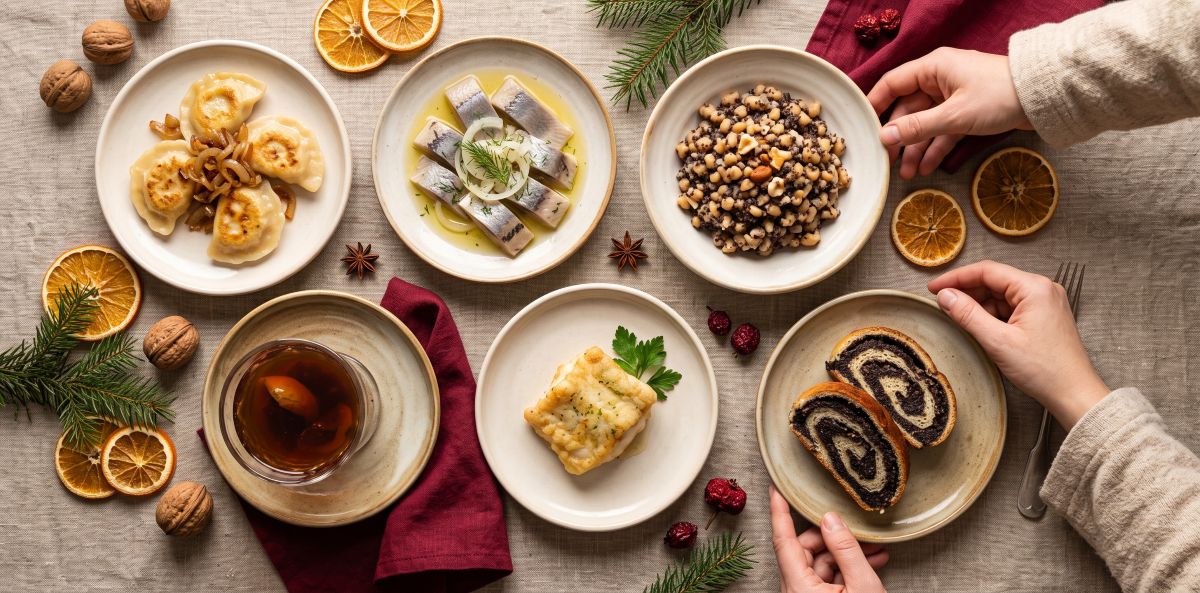
Polish Christmas Eve food changes from region to region. The frame is the same everywhere (a meatless supper that begins with the first star and the sharing of opłatek), but the dishes depend on local rivers, forests and harvests: gingerbread moczka and poppy seed makówki in Silesia, barley with swede and honey (kołatanka) in Podhale, dried-fruit soup with noodles in Kashubia, potato rwaki in Masovia, wild-mushroom barszcz in Podlasie, and poppy seed noodles in Greater Poland. Treat the dishes below as examples, not rules: tables differ from village to village and from family to family.
New to the tradition? Start with What Is Wigilia?, then see the 12 dishes and our week-by-week planning guide. This article is the regional map.
Silesia (Śląsk)
Silesia has some of the best-known sweet Christmas Eve dishes. Moczka, also called bryja, is made from a special gingerbread soaked with almonds, raisins, dried plums, apricots, figs and other fruit in dark beer. Some modern versions skip the beer and use fruit and compotes instead. Makówki are layers of sweet bread and poppy seeds boiled in milk with butter, with dried fruit and nuts, served cold; in Silesia they are served almost exclusively on Christmas Eve, and outside the region they are known as makiełki, for example in Poznań and Łódź. Silesian tables also feature siemieniotka, a linseed soup.
Podhale and Małopolska
In the Tatra highlands of Podhale, Culture.pl describes kołatanka: cooked barley mixed with swede and honey. Elsewhere in Małopolska (Lesser Poland), Polish at Heart lists mushroom soup (zupa grzybowa) with square homemade pasta (łazanki), potato flatbreads called moskole served with mushrooms, and trout, especially in the mountains. Culture.pl adds fizioły, big white beans cooked with smoked prunes, rosemary and honey, from Małopolska and the Pieniny.
Kashubia and Pomerania
In Kashubia, supper traditionally opens with a dried-fruit soup with noodles, eaten instead of barszcz, according to Pomorskie Travel. Up to ten meatless dishes are served from peas, beans, poppy seed, dried mushrooms and fruit, cabbage and potatoes; herring and eel are common, and kuch, a yeast cake, is a traditional treat. Culture.pl also describes brzad, a soup of boiled dried fruit served with small dumplings, from Kashubia and Kociewie. On the coast of Pomerania, Polish at Heart lists herring with apples and a fish soup with herring, and Culture.pl mentions sieja (whitefish) fried and served with a mushroom sauce.
Masovia (Mazowsze)
Polish at Heart lists white barszcz (a soup with cabbage and mushrooms), rwaki (potato dumplings with cabbage and mushrooms), pike-perch (sandacz), cranberry kisiel (a homemade jelly) and herring in cream. Culture.pl describes rwaki as dumplings made of boiled potatoes, flour and eggs.
Podlasie
In the east, Polish at Heart describes barszcz made on wild mushrooms, local wareniki (pierogi shaped by Belarusian, Ukrainian, Jewish and Tatar influences) and a forest-raspberry compote sweetened with honey. The old eastern borderlands (Kresy) are also the home of kutia: boiled wheat with poppy seed, honey and nuts, traditionally eaten first, right after the opłatek, according to Sophie Hodorowicz Knab. A regional saying goes, “There is no Wigilia without kucja.”
Greater Poland (Wielkopolska)
Region Wielkopolska lists fruit soup with dried apples and prunes served with small noodles, poppy-seed noodles, herring in cream and in oil, cabbage with white beans, baked carp, mushrooms roasted in butter, stewed prunes, gingerbread and poppy-seed cake. Borscht with uszka, mushroom soup with łazanki, kutia and pierogi are newer additions that came through Western influence, media, migration and marriage. A masked visitor called Gwiazdor, in a sheepskin coat worn inside out, traditionally brings the presents after supper.
At a glance
| Region | Dishes to look for |
|---|---|
| Silesia | Moczka, makówki, siemieniotka |
| Podhale / Małopolska | Kołatanka, mushroom soup with łazanki, moskole, trout |
| Kashubia / Pomerania | Dried-fruit soup with noodles, herring with apples, eel, kuch |
| Masovia | White barszcz, rwaki, sandacz, herring in cream |
| Podlasie | Wild-mushroom barszcz, wareniki, forest-raspberry compote |
| Greater Poland | Dried-fruit soup, poppy-seed noodles, herring, poppy-seed cake |
Build a regional menu at home
- Pick a region that matches your family roots or curiosity, and cook two or three of its dishes.
- Fill the rest of the twelve with the classics from our 12-dish guide.
- Substitute freely where an ingredient is hard to find. Trout or cod are common stand-ins for carp.
If you would like recipes, history and notes for every dish across the regions, see Wigilia: A Polish Christmas Cookbook of Three Tables, with 150 recipes and six regional chapters (Silesia, Podhale & Małopolska, Kashubia, Mazovia, Podlasie, Greater Poland & Pomerania), in paperback or Kindle, or read more on the book page. Disclosure: Alex Herek is the publisher of this book; you can see all titles on the Amazon author page.
Key takeaways
- Wigilia shares one frame across Poland, but the dishes are regional.
- Silesia: moczka and makówki. Podhale: kołatanka. Kashubia: dried-fruit soup. Masovia: rwaki. Podlasie: wild-mushroom barszcz. Greater Poland: poppy-seed noodles.
- Kutia comes from the eastern borderlands and is now served widely.
- Use the regions as inspiration; traditions vary by village and family.
Sources
- 12 Little-Known Regional Christmas Dishes From Around Poland, Culture.pl (moczka, makówki, siemieniotka, brzad, kołatanka, rwaki, fizioły, sieja).
- Where do your Wigilia (Christmas Eve) dishes come from?, Polish at Heart (dishes by region).
- Moczka, Wikipedia (ingredients, Silesia, Christmas Eve).
- Makówki, Wikipedia (ingredients, regional names, served cold).
- Wigilia in Greater Poland, Region Wielkopolska (dishes, Gwiazdor).
- Christmas Pomorskie Style, Pomorskie Travel (Kashubian Christmas Eve).
- Christmas in the Kresy: Kucja, Kucia or Kutia, Sophie Hodorowicz Knab (kutia).
Frequently asked questions
Is Polish Christmas Eve food the same everywhere in Poland?
No. The frame is shared: a meatless supper that begins with the first star and the sharing of opłatek. The dishes differ by region, so a table in Silesia can look very different from one in Podlasie or Kashubia.
What is moczka?
Moczka (also called bryja) is a Silesian Christmas Eve dish made from a special gingerbread soaked with nuts and dried fruit in dark beer; some modern versions use fruit and compotes instead of beer (Wikipedia).
What are makówki?
Makówki are layers of sweet bread and poppy seeds boiled in milk, with dried fruit and nuts, served cold. They are traditional in Silesia and known as makiełki in places such as Poznań and Łódź (Wikipedia).
Is kutia eaten all over Poland?
Kutia, made of boiled wheat, poppy seed, honey and nuts, comes from the old eastern borderlands (Kresy). It spread widely and is now served in many regions and in the Polish diaspora.
How can I choose a regional menu if I am cooking outside Poland?
Pick one or two dishes from the region you or your family connect with, such as a Silesian moczka or a Masovian white barszcz, and fill the rest of the twelve with the classics. Substitutions such as trout or cod for carp are common.
Want the full A Polish Christmas Cookbook of Three Tables?
150 recipes, three historic tables, six regions of Poland.