
What Is Wigilia? A Complete Guide to Polish Christmas Eve Traditions
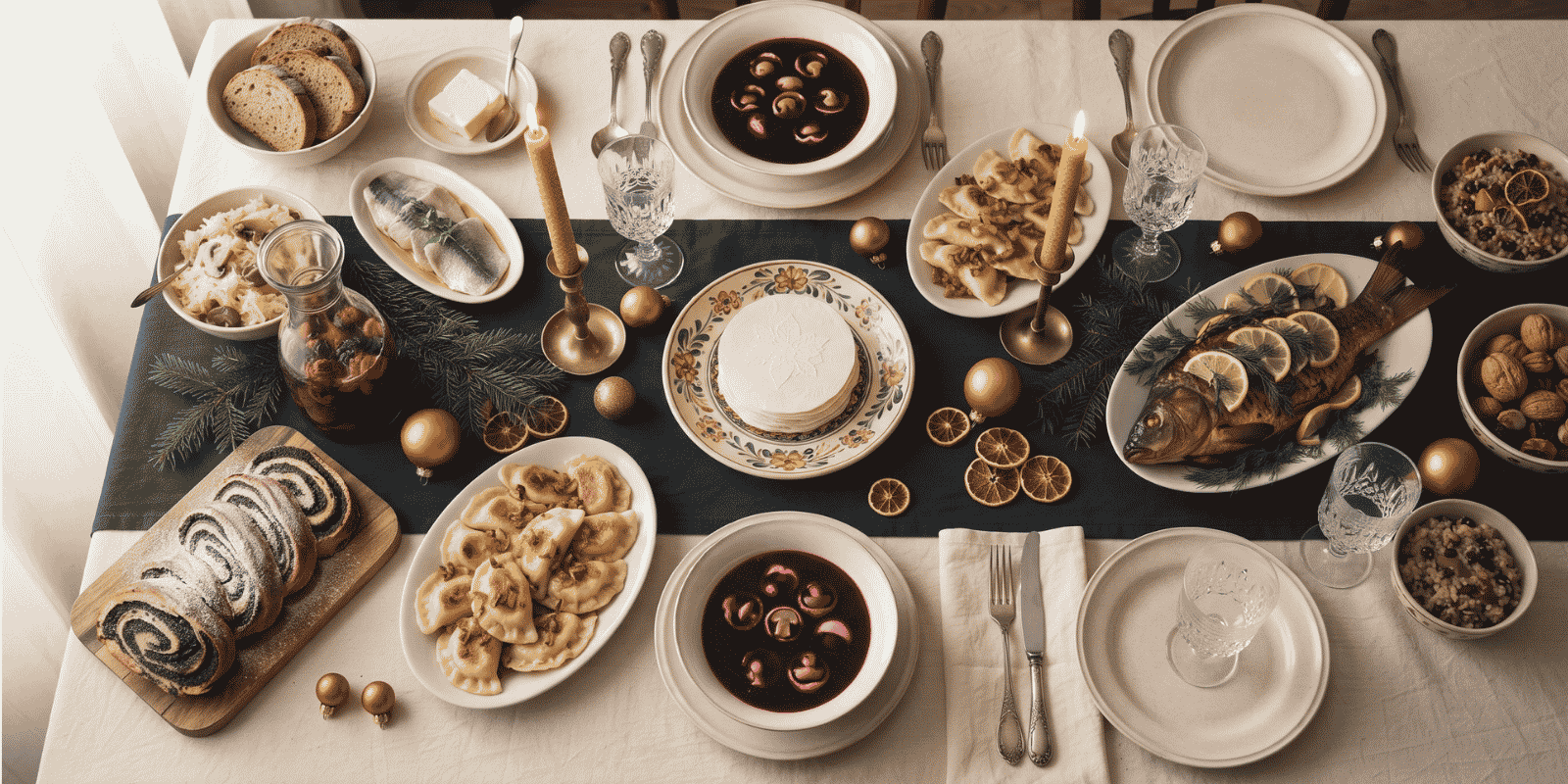
Quick answer: Wigilia is the traditional Polish Christmas Eve supper, celebrated on December 24th. It centers on a meatless, symbolic meal shared with family, the breaking of opłatek, a thin ceremonial wafer, and an empty place setting left for an unexpected guest.
The meaning behind the word
The word Wigilia comes from the Latin vigilare (“to keep watch”), referring to the vigil kept before the birth of Christ. For Polish families, Wigilia is not simply a meal — it is the emotional and spiritual center of the entire Christmas season, often considered more significant than Christmas Day itself.
Unlike a typical festive dinner, Wigilia follows a specific sequence of customs that has been passed down through generations, with regional variations across Poland but a shared core structure everywhere.
At a glance
- Celebrated on December 24th, beginning at the first sighting of the evening star.
- The meal is meatless, tied to the Catholic tradition of fasting before Christmas.
- An odd number of dishes is served, most commonly twelve — one for each apostle.
- Opłatek, a thin ceremonial wafer, is shared before the meal begins.
- One empty place setting is left at the table for an unexpected guest.
The core customs of Wigilia
Waiting for the first star
Families traditionally wait to begin the meal until the first star appears in the evening sky, a custom known as pierwsza gwiazdka. It symbolizes the Star of Bethlehem and marks the formal start of the celebration.
Opłatek — the Christmas wafer
Before eating, family members share opłatek, a thin unleavened wafer similar to a communion host. Each person breaks a piece from another’s wafer while exchanging wishes for the coming year — a moment of reconciliation and gratitude that opens the meal.
An empty place at the table
Many Polish families set one extra plate at the table, left empty for an unexpected guest or a deceased family member. It reflects both hospitality and remembrance, rooted in older beliefs that spirits of ancestors return to visit on this night.
A meatless meal
Historically tied to a day of fasting in the Catholic tradition, the Wigilia meal is meatless. Fish — particularly carp — dominates the table, alongside dishes built from grains, mushrooms, cabbage, and dried fruit rather than meat.
How many dishes are served?
The best-known custom is serving an odd number of dishes, most commonly twelve, one for each apostle. In some regions the number is seven or nine instead. The exact dishes vary by family and region, but the symbolic meal typically includes:
| Course type | Common dishes |
|---|---|
| Soup | Barszcz (beet soup) with uszka (mushroom dumplings), mushroom soup |
| Fish | Carp, herring in oil or cream |
| Dumplings | Pierogi (filled dumplings) — mushroom-cabbage, potato |
| Vegetables & grains | Kapusta z grzybami (sauerkraut with mushrooms), kutia (wheat and poppy-seed dish, eastern regions) |
| Dessert | Makowiec (poppy-seed roll), kompot (dried fruit compote) |
Regional differences
Wigilia is not celebrated identically across Poland. In Silesia, moczka — a spiced compote-based dish — often appears; in the eastern borderlands, kutia, a wheat-and-poppy-seed dish shared with Ukrainian and Lithuanian tradition, is common; in Mazovia and central Poland, barszcz with uszka is nearly universal. These regional layers make Wigilia less a single fixed menu and more a shared framework that families adapt with their own heritage.
Wigilia vs. Christmas Day dinner
Wigilia (December 24th, evening) is meatless, ritual-driven, and centers on symbolism and family reunion. Christmas Day dinner (December 25th), by contrast, is a more conventional festive meal that typically includes meat, such as roast goose, duck, or pork, and carries fewer ritual elements.
Bringing Wigilia to your own table
Recreating an authentic Wigilia doesn’t require Polish heritage — it requires understanding the rhythm of the evening: the wait for the star, the sharing of opłatek, and a table built around meaning rather than abundance.
Frequently asked questions
Is Wigilia the same as Christmas Eve?
Yes — Wigilia is the Polish name for the Christmas Eve celebration, specifically referring to the traditional supper held that evening.
Why is there an empty seat at the Wigilia table?
It is left for an unexpected guest or in memory of family members who have passed away, symbolizing hospitality and remembrance.
Why are there 12 dishes at Wigilia?
Twelve dishes traditionally represent the twelve apostles, though some regions serve seven or nine dishes instead, depending on local custom.
Is Wigilia dinner always meatless?
Traditionally yes, tied to the Catholic custom of fasting before Christmas. Fish, especially carp, is the featured protein instead of meat.
What time does Wigilia start?
By tradition, once the first star appears in the evening sky — usually just after sunset on December 24th.
Want the full A Polish Christmas Cookbook of Three Tables?
150 recipes, three historic tables, six regions of Poland.